
Disclosure: As an Amazon Associate, I may earn from qualifying purchases made through links on this page. This article is meant to inform, and product details can change, so the current listing is always the best source for specifications.
Anyone who has shared a home with a dog, a cat, or a toddler knows the moment. You hear a suspicious sound, or you come around the corner and see a wet patch on the rug, and your stomach drops. Full-size carpet cleaners are great for whole-room projects, but they’re bulky, slow to set up, and overkill for a single mess. That gap is where portable spot cleaners come in.
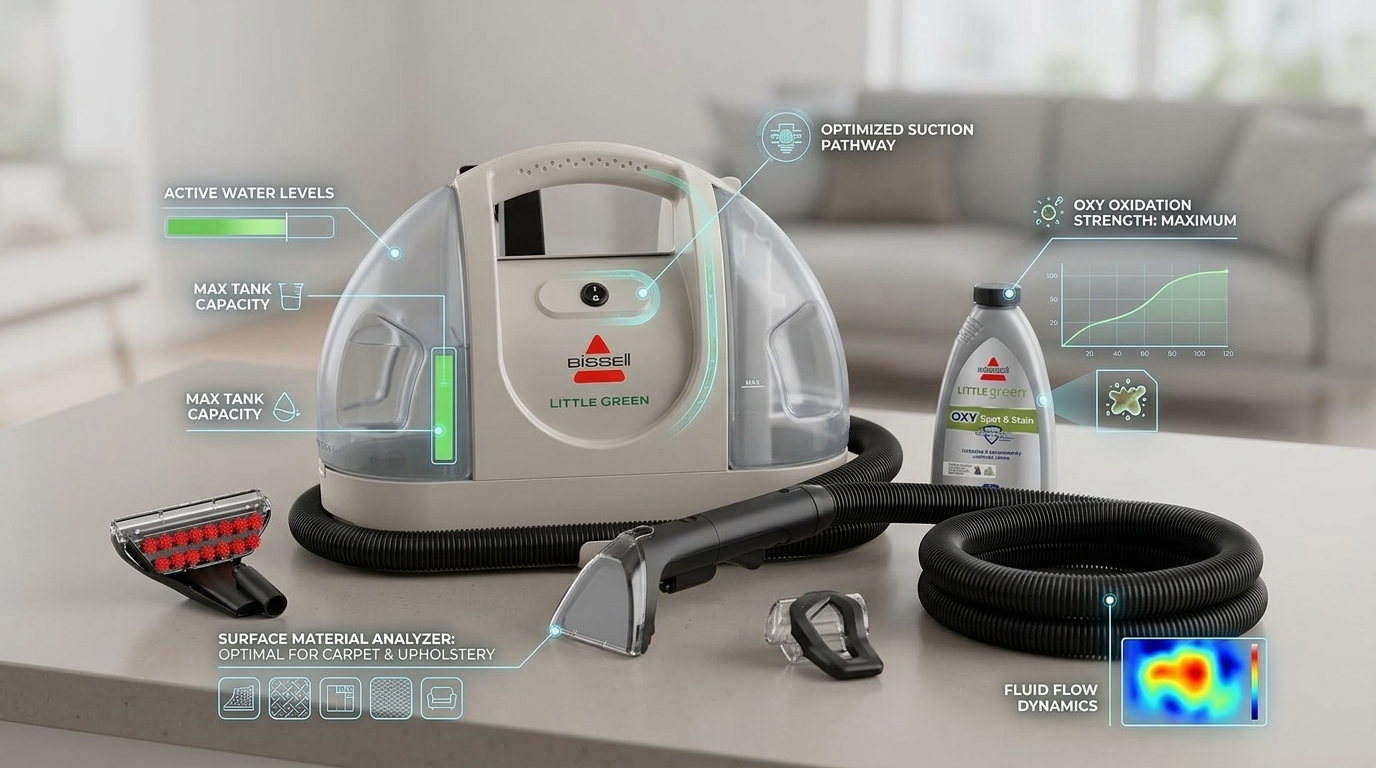
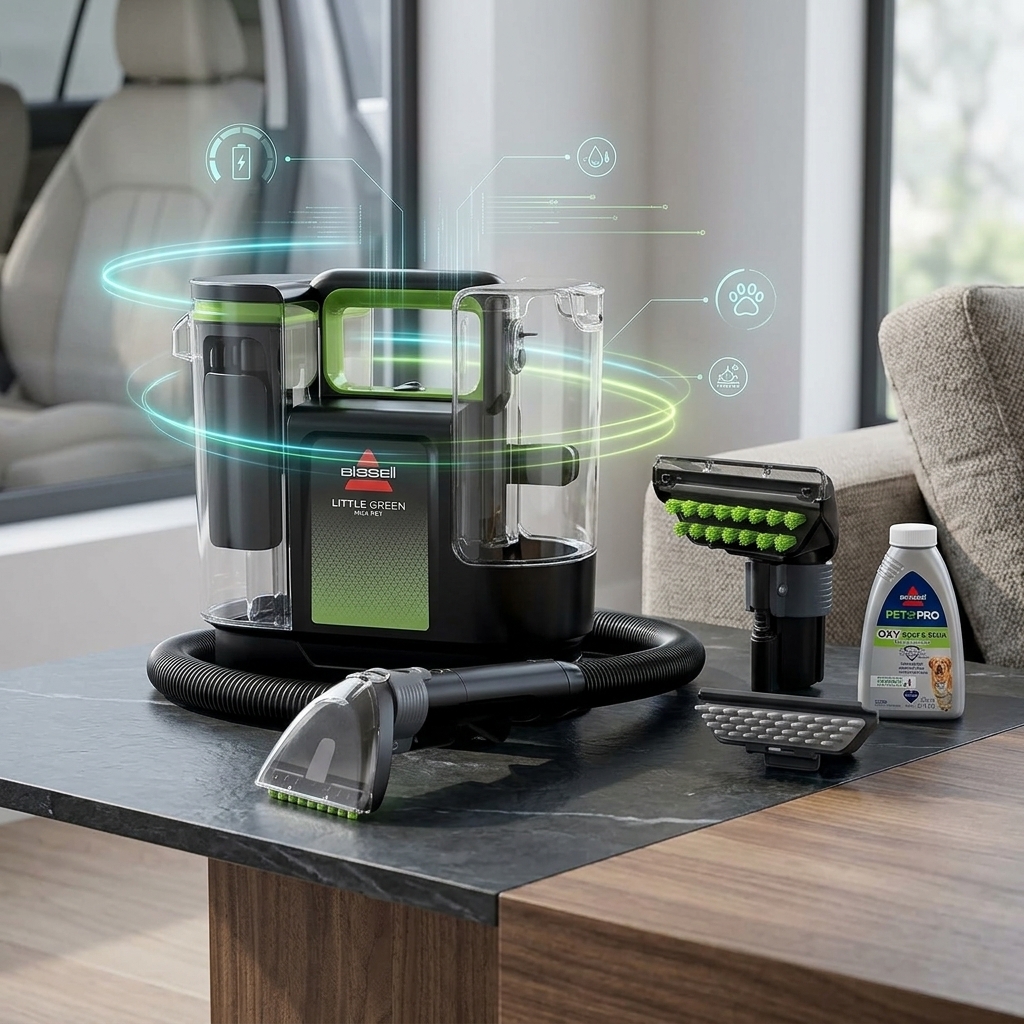
This article looks at one product in that category, the BISSELL Little Green Max Pet 3860. The aim is to explain what this type of machine does, what the listing says it includes, where it might fit into a household routine, and where its limits are. Whether you end up with this model or something else entirely, you should come away knowing which questions to ask before choosing a portable cleaner.
What Is a Portable Carpet and Upholstery Cleaner?
A portable cleaner, sometimes called a spot cleaner or compact deep cleaner, is a small machine built for targeted jobs rather than whole-floor cleaning. Most work on the same basic principle as their larger cousins. The machine mixes water with a cleaning formula, delivers it to the fabric through a tool, agitates the area, and then pulls the dirty liquid back into a separate recovery tank with suction.
The appeal is convenience. You can carry it to a staircase, a car, or a couch, and you don’t need to drag out a large upright machine for a spill the size of a dinner plate. The tradeoff is scale. These machines are designed to handle small areas, not to replace larger equipment when you’re cleaning an entire living room.
The Little Green Max Pet 3860 belongs to this category. Going by the product title, it is aimed at pet households and is paired with two accessories: a self-cleaning tough stain tool and a pet hair removal tool. The title also mentions car and auto detailing and deep upholstery cleaning as intended uses, which tells you something about how the manufacturer positions it.
Key Features Worth Understanding
Product titles can be dense, so here is what each element generally means in practical terms. For exact specifications such as dimensions, tank capacity, cord length, and what’s included in the box, the Amazon listing is the authoritative source.
The Pet-Focused Design
The “Pet” in the name signals that the machine is meant for the kinds of messes animals create: urine accidents, muddy paw prints, vomit, drool, and the stubborn odors that can follow them. Pet stains tend to be a different challenge from a spilled glass of juice. Urine, for example, can soak deeply into carpet fibers and padding, and leftover residue is often what keeps an odor around even after the surface looks clean.
Pet-oriented cleaning machines are usually sold alongside formulas intended for pet stains and odors. That pairing matters, because the machine handles the mechanical part of cleaning (applying liquid, agitating, extracting) while the formula does the chemistry. It’s worth checking the listing or manual to see which formulas are recommended or compatible with this model.
The Self-Cleaning Tough Stain Tool
One of the named accessories is a “self-cleaning” tough stain tool. As the name suggests, this is a hand tool with bristles, meant for working on stubborn spots that need more than gentle suction. The self-cleaning part refers to a feature designed to rinse the tool itself after use, typically by running clean water through it so that leftover dirt doesn’t sit in the bristles and hose.
This addresses a practical annoyance. With older or simpler designs, cleaning the tool after a messy job can be a chore in its own right. A rinse function doesn’t remove the need for basic upkeep, but it may make the end of the job less unpleasant. The manual is the place to confirm the exact procedure.
The Pet Hair Removal Tool
The second named accessory is a pet hair tool. Anyone with a shedding dog or cat understands why this matters. Hair embeds itself in upholstery, car seats, stair carpeting, and pet beds, where it can be difficult to lift with ordinary suction alone. A dedicated hair tool is usually designed with a textured or rubberized surface, or another agitating mechanism, to loosen hair so it can be pulled away.
Hair removal is a separate step from stain removal, and it’s often best done first. If you try to wet-clean a surface still covered in loose hair, you’ll end up with damp clumps that are harder to deal with.
Versatility Beyond Floors
The mention of car and auto detailing and deep upholstery is a reminder that portable cleaners aren’t limited to carpet. Fabric seats, floor mats, cargo areas, sofa cushions, and ottomans are all common candidates. The compact footprint is part of why these machines work well for vehicles, where a larger unit simply wouldn’t fit comfortably.
That said, not every fabric tolerates water and agitation equally well, which is covered in more detail in the considerations section below.
Portability and Storage
Because these machines are designed to be moved around, weight and handling matter. A cleaner you dread carrying upstairs is one you might avoid using. Compact machines also tend to store easily in a closet or utility space. Check the listed dimensions and weight against the spaces where you’d actually use and store it.
How It Can Be Used: Practical Ideas
The most useful way to think about a portable cleaner is by the situations where it saves effort. Here are some of the most common.
Fresh Pet Accidents
Speed is the single biggest factor in dealing with pet messes. The general advice from most cleaning guides is to blot up as much liquid as you can first, using paper towels or an absorbent cloth and pressing rather than rubbing. Rubbing pushes the liquid deeper and spreads it across a wider area. After blotting, a portable cleaner can apply a cleaning solution and then extract it, pulling out moisture and residue that blotting alone would leave behind.
Older or Set-In Stains
Stains that have dried are tougher, and this is where a bristled stain tool comes into play. Working a cleaning solution into the fibers with gentle agitation, then extracting, can sometimes lift marks that surface wiping wouldn’t touch. Results vary. Older stains, especially ones involving dyes, may not come out fully, and it’s better to go in with realistic expectations than to assume any machine can erase every mark.
Stairs
Carpeted stairs are a classic trouble spot. They collect dirt where feet land, and they’re awkward to clean with a large machine. A handheld tool with a flexible hose lets you work one step at a time while staying in a comfortable position. Stairs also tend to catch pet hair in the corners, which is where an attachment designed for hair can be handy.
Car Interiors
Vehicles accumulate their own category of mess: spilled coffee, muddy footwear, pet hair on the back seat, crumbs from snacks. A portable cleaner can handle fabric seats and floor mats without requiring you to haul equipment around. If you transport a dog regularly, the pet hair tool may be especially relevant for seat covers and cargo areas.
A few car-specific notes are worth keeping in mind. Interiors are enclosed spaces, so moisture needs a path to dry. Leaving windows open or running the vehicle’s ventilation, and avoiding oversaturation, helps prevent lingering dampness. Also, some car seats use leather, vinyl, or specialty fabrics that aren’t suited to wet extraction, so check the material before you start.
Sofas, Chairs, and Upholstered Furniture
Upholstery is where careful reading of care labels becomes important. Most furniture has a tag indicating which cleaning methods are safe, often using letter codes. Those codes generally indicate whether water-based cleaning is acceptable, whether solvents are required, or whether a professional should handle it. If the tag permits water-based cleaning, a portable machine can be a practical tool for spills, pet-related spots, and general freshening.
Rugs and Mats
Small area rugs, entryway mats, and pet-area mats are natural fits, since they’re compact enough for a spot cleaner to handle properly. Again, check the rug’s material. Some rugs, such as certain wool or natural-fiber types, have specific care requirements, and heavy moisture can cause problems.
Pet Bedding and Crate Areas
Fabric pet beds and crate pads can often be spot cleaned, depending on construction. For items that are machine washable, the washing machine may still be the more thorough option, but a portable cleaner can help with items that are too bulky for the wash or attached to furniture.
A General Approach to Using Any Portable Cleaner
While each machine has its own instructions, most jobs follow a similar rhythm. This is general guidance rather than a substitute for the manual.
- Remove loose debris first. Vacuum or pick up solids, hair, and dry dirt. This prevents turning everything into mud once liquid is added.
- Test a hidden spot. Try the cleaning solution on an inconspicuous area to check for color bleeding or fabric damage.
- Blot fresh spills. Take up as much liquid as you can before using the machine.
- Apply solution and agitate gently. Work with the machine as directed, using overlapping passes rather than soaking a single spot.
- Extract thoroughly. Keep going until the liquid coming back looks clearer. Multiple passes with less water are generally better than one heavy pass.
- Let it dry with airflow. Fans or open windows can speed things up and reduce the risk of musty smells.
- Empty and clean the tanks. Dirty water sitting in the recovery tank can develop an odor, so dump and rinse it after every use.
Who It May Be Suitable For
No single machine works for everyone, but certain households may find this type of product a reasonable fit.
Pet owners. The pet-oriented design and the hair tool are aimed squarely at this group, especially people with young animals, senior pets prone to accidents, or shedding breeds.
Families with young children. Juice, milk, and snack spills on carpet or upholstery are part of the territory. A compact cleaner allows for quick responses.
Renters and apartment dwellers. Small spaces and limited storage favor compact equipment over large machines. Some renters also feel more comfortable tackling stains promptly when they’re concerned about deposit deductions, though it’s wise to follow any lease terms about cleaning.
Car owners. People who transport pets, kids, or messy cargo may appreciate something that works on seats and mats without leaving the driveway.
People who like to clean on their own schedule. Some prefer to keep a spot cleaner on hand instead of scheduling professional services for every incident.
Who Might Want to Look at Other Options
It’s just as useful to consider the other side. Someone with wall-to-wall carpeting throughout a large home who wants to clean entire rooms regularly will likely find a spot cleaner too slow for the task. Those with delicate antiques, silk or viscose rugs, or high-value upholstered furniture may prefer professional care. And anyone who simply doesn’t want to handle equipment, fill tanks, and empty dirty water may find a service more convenient.
Important Things to Consider Before Choosing
Realistic Expectations
Portable cleaners can be effective on many everyday messes, but they’re not miracle devices. Stain removal depends on the material, the type of stain, how old it is, and what has already been tried. Heat-set stains, dye-based spills, and deeply penetrated urine may only partially lift, or may require repeated treatments.
Size and Capacity
Compact machines hold smaller quantities of water than full-size ones, which means more trips to refill and empty when cleaning larger areas. Check the listed tank capacities and think about how you’d really use the machine. For occasional spot cleaning, small tanks are fine. For bigger jobs, they can become a hassle.
Fabric and Material Compatibility
Always verify that water-based cleaning is appropriate for the surface. Leather, suede, some silks, and certain specialty fabrics can be damaged by moisture or cleaning solutions. Care labels and manufacturer guidance take priority over any machine’s marketing.
Cleaning Formulas
Many machines are designed to work with specific formulas, and using the wrong product may affect performance or, in some cases, warranty coverage. Read the manual to see what’s recommended, and avoid mixing products unless the instructions allow it. If you have pets or children, it’s also reasonable to check formula labels for safety information and ventilate the area during use.
Noise
Suction machines are not quiet. If you have a nervous pet, a baby who naps lightly, or close neighbors, it’s worth thinking about when you’ll use it.
Drying Time
Even with strong extraction, fabrics remain damp for a while. Plan for ventilation and avoid replacing furniture or walking on carpet until it has dried enough. In vehicles, pay special attention to drying to prevent moisture-related odors.
Upkeep
Like any appliance that handles dirty water, these machines need regular rinsing and occasional attention to hoses, filters, and brushes. A little maintenance after each use goes a long way, and skipping it can lead to odors or reduced performance.
Warranty and Support
It’s reasonable to check the warranty terms and what they cover before committing. The listing and manufacturer’s site generally spell out coverage details.
Comparing General Categories of Carpet and Upholstery Cleaning Options
Rather than pitting brands against each other, it can be more helpful to compare types of solutions. Each has a place.
Portable Spot Cleaners
Strengths: Compact, easy to store, good for small spills, stairs, cars, and upholstery. Quick to set up.
Limitations: Small tanks make large areas slow to clean. Less suited to whole-room cleaning.
Full-Size Upright Carpet Cleaners
Strengths: Larger capacity, wider cleaning path, better suited to entire rooms and high-traffic zones.
Limitations: Bulkier, heavier, and more involved to set up and store. Often more than you need for an isolated accident.
Handheld Vacuum-Style Wet/Dry Cleaners
Strengths: Often very lightweight and cordless, handy for quick cleanups.
Limitations: Varies widely in extraction power and in the ability to rinse and recover liquid from deeper fibers.
Manual Methods (Blotting, Sprays, Brushes)
Strengths: Inexpensive and always available. Good for very small, fresh spills.
Limitations: Harder to extract residue from deep inside fibers, which can leave behind moisture or lingering odors.
Professional Cleaning Services
Strengths: Powerful equipment, experienced technicians, and appropriate methods for delicate or high-value items.
Limitations: Requires scheduling and cost, and isn’t practical for every small incident.
For many households, these approaches overlap. Someone might keep a portable cleaner for day-to-day messes and call in a professional once in a while for a deeper whole-home refresh.
Care and Maintenance Tips
A few habits can help any portable cleaner last and perform consistently:
- Empty the dirty water tank right after each job, and rinse it.
- Run clean water through the hose and tool, following the instructions for any self-cleaning function.
- Clear hair and debris from brushes and accessories.
- Let removable parts air dry before storing them so they don’t develop odors.
- Store with tank lids off or loosened, if the manual suggests, to allow airflow.
- Keep the manual handy for troubleshooting and part-care guidance.
Frequently Asked Questions
Is this type of cleaner only for pet messes?
No. While the name and accessories point toward pet households, the same machine can be used for general spills, dirt, and upholstery refreshing. The pet focus simply shapes the tools and the design.
Can a portable cleaner remove pet odors completely?
It can help, particularly if the source of the odor, such as urine residue, is extracted. However, deeply penetrated accidents that have soaked into padding or subflooring may need more than surface-level treatment. Results depend on the situation.
Is it suitable for car interiors?
Many people use portable cleaners on fabric car seats and floor mats, and the listing specifically mentions auto detailing. Check your vehicle’s upholstery type first, and make sure the interior can dry properly afterward.
Can I use it on any sofa?
Not necessarily. Look for the care tag on your furniture. If it indicates that water-based cleaning is acceptable, a portable machine may be an option. If it calls for solvent-only cleaning or professional service, follow that guidance.
Does the pet hair tool replace vacuuming?
Probably not. It’s intended as an additional tool for loosening embedded hair from fabrics, and regular vacuuming still plays an important role in general upkeep.
How long does it take for things to dry?
Drying time varies with the fabric, the amount of moisture, room temperature, and airflow. Good ventilation helps. Thorough extraction, using multiple light passes, can reduce drying time.
Do I need to use a specific cleaning formula?
Many manufacturers recommend their own formulas, and using recommended products is usually the safest approach. The manual and listing should clarify what’s compatible.
Is it practical for whole-room cleaning?
It can be used that way, but because it’s designed for smaller areas, it may feel slow for large spaces. Many people prefer a larger machine for whole rooms.
What’s the best way to handle a brand-new accident?
Blot first, then use the cleaner according to the instructions. Acting quickly generally improves the odds of a good result.
How should I clean the machine after use?
Empty and rinse the recovery tank, flush the hose and tool with clean water as directed, and let components dry. The manual will have model-specific steps.
Final Thoughts
Household messes rarely arrive at convenient times, and having the right tool on hand can make them less stressful to deal with. The BISSELL Little Green Max Pet 3860 sits in the compact, spot-cleaning category, with a pet-oriented design, a bristled stain tool with a self-rinsing feature, and a separate accessory for pet hair. On paper, that combination makes sense for people juggling carpets, stairs, car seats, and upholstery alongside the realities of life with animals or kids.
Like any cleaning device, it comes with boundaries. It’s built for targeted jobs rather than whole-house projects, it depends on proper technique and suitable fabrics, and it needs regular upkeep to keep working well. Reading care labels, testing in hidden spots, and adjusting expectations for older or stubborn stains will do as much for your results as the machine itself.