
Disclosure: As an Amazon Associate, this site may earn from qualifying purchases. This article is informational and is not based on hands-on testing of the product.
Every household has a moment like this. A glass of red wine tips over on the living room rug, the dog comes in from a rainy walk, or a toddler decides the couch cushion is a canvas. You could call a professional, but that is rarely practical for a single stain. You could scrub with paper towels and hope, but that often pushes the mess deeper into the fibers. This gap between “too small for a pro” and “too stubborn for a rag” is where portable spot cleaners come in.
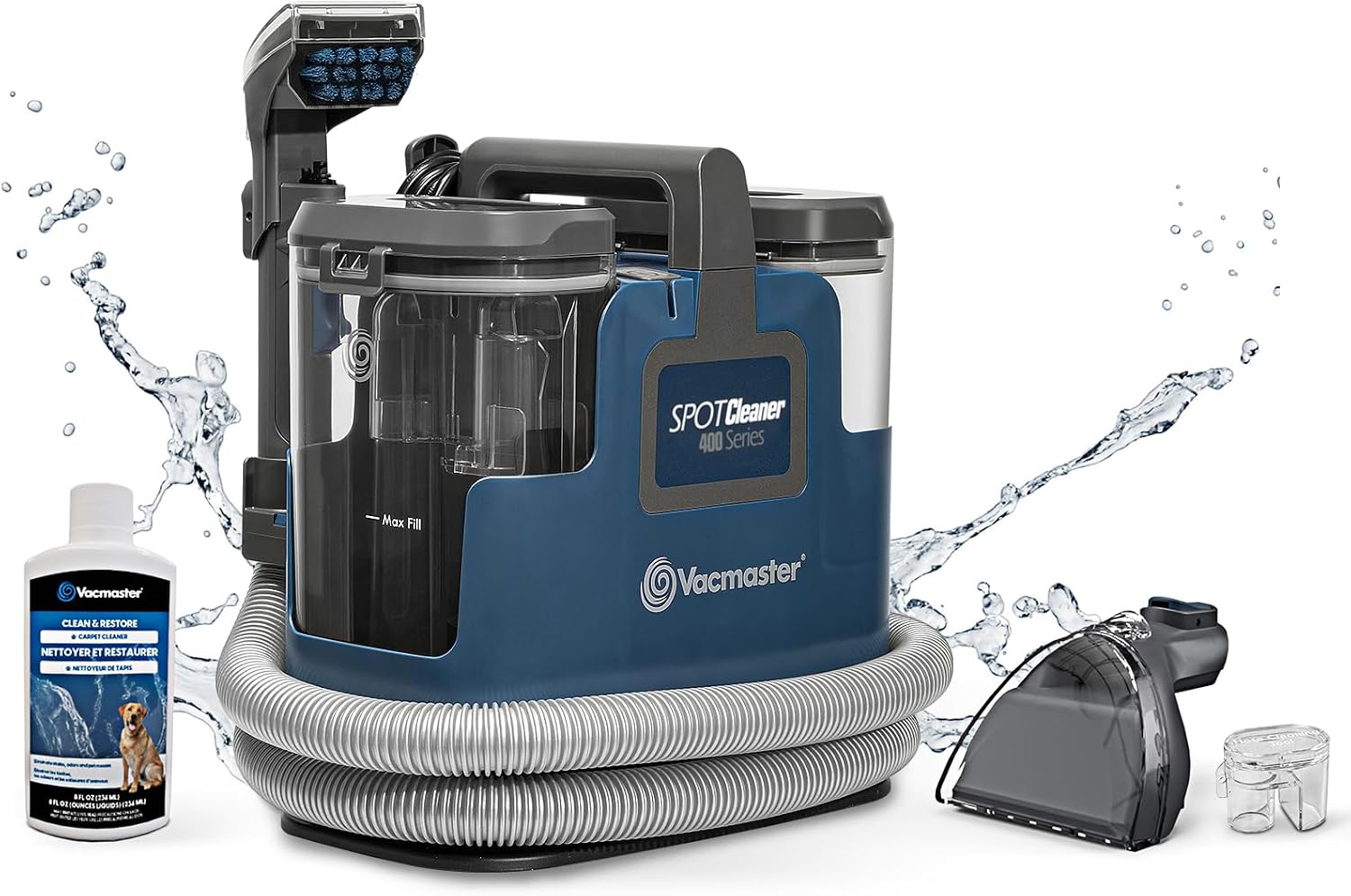
This article looks at one option in that category, the Vacmaster 400 Series Portable Carpet & Upholstery Spot Cleaner Machine (model SCB301). We’ll go through what it is designed to do, how its listed features work in everyday terms, where it could fit in a home, and what to weigh before deciding whether a machine like this suits your needs. The goal is a clear picture, not a pitch.
What Is a Portable Spot Cleaner, Exactly?
A portable spot cleaner is a compact machine that does three things at once: it sprays a cleaning solution onto a fabric surface, agitates it (usually with a brush or textured tool), and then pulls the dirty liquid back out with suction. The “extraction” step is what sets it apart from household scrubbing. Instead of leaving moisture and loosened dirt in the carpet, the machine removes much of it.
These units are generally smaller and lighter than full-size carpet cleaning machines. They are built for targeted jobs such as stair treads, car seats, sofa cushions, pet accident spots, and small area rugs, rather than an entire living room floor. Most are corded, most use a clean-water tank and a separate dirty-water tank, and most rely on attachments connected by a hose.
The Vacmaster 400 Series SCB301 belongs to this family. According to its listing title, it is marketed for carpets and upholstery and emphasizes 16 kPa of suction along with a set of tools aimed at pets, area rugs, and couches. Those three details (suction, tools, and target surfaces) shape most of the discussion below.
Key Features Worth Understanding
Suction Power: What “16 kPa” Means
The listing highlights 16 kPa of suction. A kilopascal is a unit of pressure, and in a vacuum context it describes how strong the pull is at the nozzle. Higher numbers generally indicate a stronger ability to lift liquid from fibers, although suction is only one part of the picture.
Some context is helpful here. Extraction performance depends on the suction rating, the nozzle design, how well the nozzle seals against the surface, how saturated the fabric is, and how slowly or quickly you move the tool. A machine with strong suction paired with a poorly shaped nozzle may still leave dampness behind. On the other hand, moderate suction used with slow, overlapping passes can work well on light soiling. Think of the number as a useful indicator, not a guarantee of results.
Suction also matters for drying time. The more water that comes out of the fabric, the less has to evaporate on its own, which helps reduce the chance of lingering dampness in padding and cushions.
A Set of Attachments for Different Surfaces
The product name refers to “versatile tools,” and this is one of the more practical aspects of any spot cleaner. Carpet, upholstery, stair risers, and car interiors all present different shapes and textures. A single wide nozzle cannot do everything well. Typical tool categories in this class of machine include:
- A small handheld brush tool for agitating and extracting on couch cushions, ottomans, and car seats.
- A wider tool for flatter surfaces like rugs and stair treads.
- A hose that connects the tool to the main unit, allowing the body to sit on the floor while you work on furniture.
Since exact accessory lists and dimensions can vary by listing version, it is worth reading the product page carefully to see precisely which tools are included before you decide.
Portability and Footprint
The word “portable” is part of the product name, and it matters more than it might sound. A machine that is easy to carry from the living room to a staircase to a parked car will get used more often than one that feels like a project to set up. Compact spot cleaners tend to be manageable for people who do not have much storage space, such as apartment dwellers, or who want something they can stash in a closet rather than a garage.
Portability does come with trade-offs, which we’ll cover later. Smaller tanks mean more frequent refills, and smaller motors mean you are working in sections rather than covering a whole room quickly.
Designed with Pet Messes in Mind
The listing specifically mentions pets. Pet owners deal with a recurring set of problems: muddy paw prints, accidents on carpet, shedding on upholstery, and odors that seem to hang around. A machine that can spray, agitate, and extract is a more suitable approach to these tasks than surface wiping, because pet accidents often soak into carpet backing where simple blotting cannot reach.
It helps to keep expectations realistic. Older or deeply set stains and odors may need repeat treatment, a cleaning solution formulated for pet messes, or professional help. A spot cleaner is a tool for managing everyday accidents, not a cure-all.
How It Can Be Used
One of the more useful ways to think about a machine like this is by situation, not by specification. Here are common scenarios where a portable carpet and upholstery spot cleaner tends to come up.
Fresh Spills on Carpet
Acting quickly is the single biggest factor in stain removal, and a spot cleaner makes it easier to act quickly. Blot up the excess liquid first with a clean cloth, then treat the area with the machine. Working from the outside edge of a spill toward the center helps keep it from spreading.
Pet Accidents
For urine accidents, blotting first and then cleaning with a solution made for pet stains is usually advised by cleaning professionals. A spot cleaner then helps extract the diluted residue. If an odor persists after drying, a second pass may be required, or an enzymatic cleaner may be a better fit.
Couch and Chair Cushions
Upholstery requires more caution than carpet. Many sofas carry a cleaning code on a tag, typically W, S, W/S, or X, which tells you what kind of cleaner is safe to use. Water-based cleaning is generally fine for W and W/S fabrics, but S-coded fabrics call for solvent-based products, and X-coded fabrics usually should not be wet-cleaned at all. Checking this tag before using any machine is a simple step that can prevent permanent damage.
Area Rugs
Smaller area rugs made from synthetic fibers often respond well to spot cleaning. Delicate, hand-knotted, silk, or wool rugs deserve more careful handling, and in many cases it is wiser to consult the manufacturer or a rug specialist first. Dyes can bleed, and natural fibers may shrink or change texture with too much moisture.
Stairs
Stair carpet is a classic trouble spot because it takes constant foot traffic and is awkward to clean with a full-size machine. A hose-and-tool setup lets you rest the unit on the floor or a lower step and work up one tread at a time.
Car Interiors
Fabric car seats and floor mats collect crumbs, mud, spilled drinks, and the occasional mystery stain. A corded machine will need a nearby outlet or an extension cord, so this use is easiest if you park near the house or garage.
Seasonal Refreshes
Some households run a spot cleaner across high-use areas a couple of times a year, such as the front-door entryway, the space in front of the couch, or a child’s play area, rather than waiting for visible stains to appear.
Who It May Be Suitable For
No single appliance suits everyone, and being honest about that is part of choosing well. Here are the kinds of households that commonly look at machines in this category.
Pet owners. Frequent small accidents, tracked-in dirt, and hair-laden upholstery make targeted cleaning a recurring need.
Families with young children. Juice, snack crumbs, and art supplies make their way into fabrics with predictable regularity.
Renters and apartment residents. People who want to keep carpets in reasonable condition, perhaps with a deposit at stake, may value a compact machine over renting a large unit.
Anyone with a lot of upholstered furniture. Couches, armchairs, and dining chairs can all benefit from occasional extraction cleaning.
People who prefer to handle small jobs themselves. If the idea of scheduling a professional for every stain feels excessive, a home unit gives more flexibility.
Less ideal candidates include people who need to clean large wall-to-wall carpeted areas all at once, who have a very limited ability to lift and carry equipment, or who have mostly hard flooring with little upholstery. In those cases, a different tool (or a service) may be a more natural fit.
Important Things to Consider Before Choosing
A balanced look at any appliance includes the limitations. Here are the practical points worth thinking through.
Tank Capacity and Refill Frequency
Compact machines generally hold a small amount of clean water and dirty water. That means stopping to refill and empty during larger jobs. Check the listing for tank capacity details and think about whether the size matches your typical cleaning sessions.
Corded Operation
Many spot cleaners in this class need to be plugged in. That affects reach, especially on stairs or in vehicles. Check the cord length listed on the product page and consider whether an extension cord would be needed.
Noise Level
Vacuum-based extraction machines are not quiet. If you have a sleeping baby, a noise-sensitive pet, or thin walls, it is something to plan around.
Cleaning Solutions
Not every machine works with every cleaner, and using the wrong product can cause excess foam or may void a warranty. Review the manual for approved solution types. Many users begin with a product formulated specifically for extraction machines.
Fabric and Material Compatibility
Always test a hidden area first. Dye transfer, water rings, and texture changes are easier to prevent than to fix. This applies to couches, rugs, and car interiors alike.
Drying Time
Even with strong extraction, fabrics will stay damp for a while. Good airflow, open windows, or a fan can help. Padding that stays wet for a long period can develop odor, so avoid over-saturating.
Maintenance
Rinsing the tanks, cleaning the brush or tool, and letting components dry between uses keeps the machine from developing its own odor. It is not a complicated routine, but skipping it can shorten the life of the equipment and undermine the cleaning itself.
Expectations for Old or Set-In Stains
Extraction tools work best on fresh or moderately aged soiling. Stains that have been in place for months, or that involve dyes, grease, or certain chemicals, may lighten but not vanish entirely.
Storage
Even compact machines need a home. Think about where the unit, hose, and attachments will live so that they’re easy to grab when needed.
Warranty and Support
Review the warranty terms and the return policy on the product page. Policies can change, so it is worth confirming current details directly with the seller.
Comparing General Categories of Carpet and Upholstery Cleaning
Rather than measuring one product against specific rivals, it is more useful to compare the categories of solutions that people usually consider. Each has a reasonable place.
Portable Spot Cleaners
Strengths: Compact, lower storage burden, good for localized messes, typically able to handle upholstery and stairs thanks to hose-and-tool setups.
Limitations: Smaller tanks, slower for large surfaces, often corded.
Full-Size Upright Carpet Cleaners
Strengths: Better for cleaning entire rooms, larger tanks, typically designed for long passes across big areas.
Limitations: Bulkier, heavier, harder to store, and awkward on stairs or furniture unless they include a hose attachment.
Hand-Held Battery or Cordless Cleaners
Strengths: Extremely convenient for quick accidents, easy to carry anywhere, no outlet needed.
Limitations: Runtime is limited, and the smaller size may make deep extraction harder.
Rental Machines
Strengths: Access to large-format equipment without ownership, suitable for occasional whole-room cleaning.
Limitations: Requires pickup and return, ongoing rental fees, and quality varies with how well the rental unit has been maintained.
Professional Cleaning Services
Strengths: Expertise, commercial-grade equipment, and suitable for delicate or valuable materials.
Limitations: Scheduling, higher cost, and not practical for every small spill.
Manual Methods (Blotting and Hand Scrubbing)
Strengths: No equipment needed, good as a first response.
Limitations: Often leaves residue behind and may not reach deep into carpet padding or cushion fill.
Many households end up using a mix. A compact spot cleaner for day-to-day accidents, a rental or professional service once in a while for a deep clean, and careful blotting as the immediate first step.
Practical Tips for Better Results with Any Spot Cleaner
These are general best practices that apply to most extraction machines, not claims specific to one model.
- Vacuum dry debris first. Loose dirt and hair turn to mud when wet.
- Blot, don’t rub. Rubbing can spread a stain and fray fibers.
- Pre-treat stubborn spots. Give a suitable cleaner a few minutes to work before extracting.
- Use slow, overlapping passes. Moving too quickly leaves moisture behind.
- Do a final dry pass. Making a few extra passes with suction only, without spraying, helps remove more water.
- Ventilate. Airflow is your best ally against lingering dampness.
- Keep pets and kids off until dry. Damp fabric picks up dirt again quickly.
- Empty and rinse the tanks right away. Standing dirty water is where odors begin.
Frequently Asked Questions
Is a spot cleaner the same as a regular vacuum?
No. A standard vacuum is meant for dry debris. A spot cleaner applies liquid and extracts it, which makes it suitable for wet-cleaning tasks. Using a dry vacuum on wet messes can damage it, so the two should not be interchanged.
Can a machine like this be used on all types of couches?
Not necessarily. Check the cleaning code on your furniture tag first. Fabrics marked with an “X” typically should not be wet-cleaned, and “S” fabrics usually require solvent-based cleaners rather than water-based ones.
Will it remove pet odors completely?
It can help reduce odors by removing the source material from fibers, but results depend on how old the accident is and how deeply it has soaked in. Enzymatic cleaners are often recommended for urine, and stubborn cases may need repeat treatment.
What does 16 kPa suction actually tell me?
It indicates the machine’s suction pressure under test conditions. It is one useful data point, but real-world performance also depends on the nozzle design, the fabric, the moisture level, and how the machine is used.
Can it clean an entire room of carpet?
It could be done in sections, but compact machines are generally designed for spot and small-area cleaning. For whole-room jobs, a full-size machine or a professional service is usually more efficient.
Is it safe for all area rugs?
Many synthetic rugs are fine, but natural-fiber, silk, antique, or hand-knotted rugs may need specialized care. Check any care label and test a hidden corner first.
How long does it take for carpet to dry afterward?
Drying time varies with room temperature, humidity, airflow, and how much water was used. Many fabrics feel dry within several hours, though thicker materials can take longer. A fan or open window speeds things up.
Do I need special cleaning solution?
Many manufacturers recommend solutions designed for extraction machines, since some household cleaners create too much foam. Always consult the user manual for compatible products.
How should I maintain it?
Empty and rinse both tanks after each use, clean the brush or tool of hair and debris, and allow everything to air-dry before storing. Refer to the manual for any model-specific instructions.
Where can I find the exact specifications?
The product listing and the manufacturer’s documentation are the most reliable sources. Details such as tank size, cord length, weight, and included accessories can differ by version, so it is wise to confirm them before deciding.
Final Thoughts
Carpet and upholstery cleaning does not have to be an all-or-nothing affair. For many households, the day-to-day challenge is small and sudden: a spilled drink, a muddy paw, a mystery mark on a cushion. A portable spot cleaner like the Vacmaster 400 Series SCB301 is designed for exactly that kind of situation, combining spraying, agitation, and suction in a compact form, with tools meant for pets, rugs, and couches.
Whether it is the right match depends on your space, your routines, and your expectations. A small machine is convenient and easy to store, but it has limits in tank size, reach, and speed. Understanding those trade-offs, checking fabric care labels, and reading the current specifications and policies carefully will do more to lead to a satisfying purchase than any single number on a spec sheet.