
Disclosure: As an Amazon Associate, I may earn from qualifying purchases. This guide is informational and is meant to help you decide whether this type of cleaner suits your household.
Every home has a spot that never quite behaves. Maybe it’s the passenger-side floor mat that collects the remains of years of coffee runs, or the corner of the sofa where a pet likes to curl up, or the stair carpet that shows every muddy footprint. Stains like these rarely justify hauling out a full-size carpet machine, yet a damp paper towel and a bit of hope don’t always finish the job.
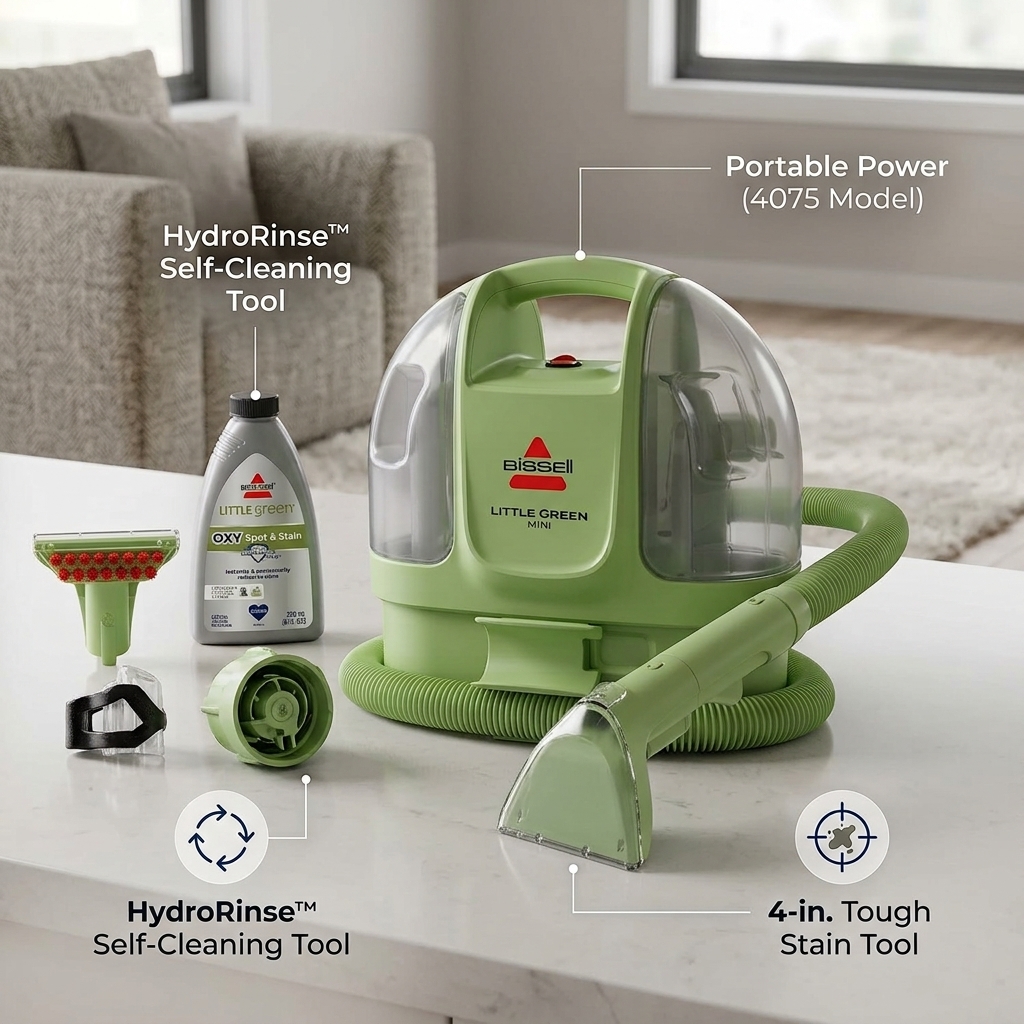
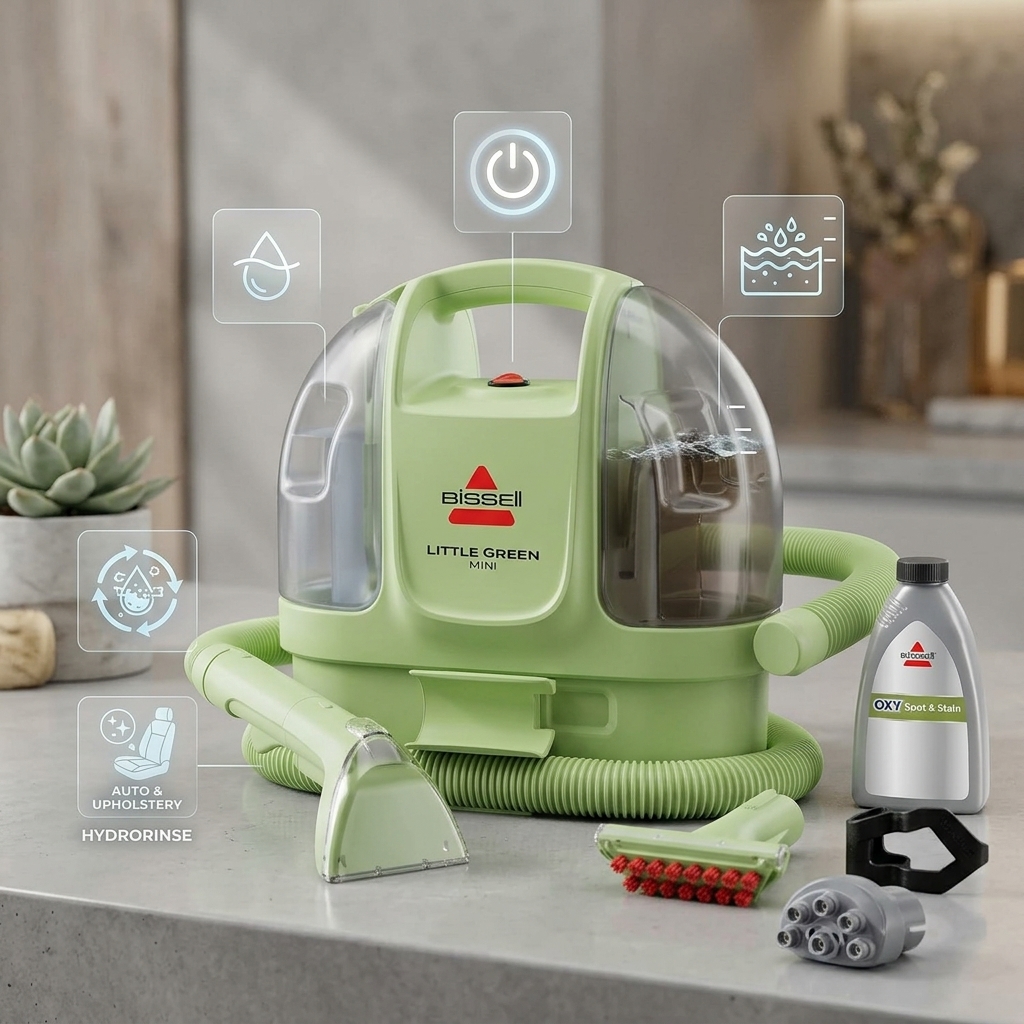
That gap is where compact portable cleaners have found their place, and the BISSELL Little Green Mini Portable Carpet Cleaner (model 4075, in the Tea Green color) is one of the better-known examples. This article walks through what the machine includes, how its parts work, where it tends to be most useful, and what to weigh before deciding whether it belongs in your cleaning closet. The goal is to give you clear information rather than a sales pitch, so you’ll also find the limitations and trade-offs.
Understanding the Basics: What Is a Portable Spot Cleaner?
Before getting into this specific model, it helps to understand the category. A portable carpet and upholstery cleaner is a small, corded machine built around a simple idea: apply a cleaning solution to a fabric surface, agitate it slightly, then pull the dirty liquid back out with suction. Compared with scrubbing by hand, the extraction step is the important part. Soap that stays in fabric can attract new dirt, and moisture left behind can linger. Pulling the liquid out with suction removes both the loosened soil and much of the residue.
Most units in this category share a few traits. They are small enough to carry in one hand, they use two separate tanks (one for clean water and solution, one for recovered dirty water), and they come with a hose and a handheld tool rather than a wide floor head. They are designed for targeted jobs, not for whole-room cleaning.
The BISSELL Little Green 4075 follows this template and adds a few accessories that shape how it gets used day to day.
Key Features of the BISSELL Little Green 4075
Compact, Portable Design
The defining trait of this machine is its size. It’s meant to be picked up and moved with a handle, carried up stairs, set on a car seat, or tucked into a closet or under a utility shelf afterward. Anyone who has tried to wrestle a full-size carpet cleaner into a small apartment, or into the back seat of a hatchback, will understand the appeal of something scaled down.
The Tea Green finish is a cosmetic detail, but it’s worth a mention. Cleaning appliances often get stored out of sight because they look industrial. A lighter, more approachable color won’t change how the machine performs, though some people prefer equipment that doesn’t look like it belongs in a workshop.
The 4-Inch Tough Stain Tool
This version comes with a 4-inch tough stain tool, which is one of the more practical parts of the package. It’s a handheld attachment with a textured, bristled surface, meant for working on stains that have settled into fibers and don’t respond to light wiping. The bristles help loosen soil while the suction head draws the dirty liquid back into the machine.
The 4-inch width offers a reasonable balance. It’s wide enough to cover a stain without taking forever, yet narrow enough to work into tight places like stair edges, seat creases, and the gaps beside car console panels.
HydroRinse Self-Cleaning Tool
The HydroRinse tool addresses a common frustration with portable cleaners: cleaning the cleaner. After you’ve pulled dirty water through a hose and a nozzle, those parts can hold residue, and leaving it there may lead to odors or buildup over time.
The HydroRinse tool is designed to flush the hose and internal pathways with clean water after you’ve finished cleaning. You run water through the system so the passages are rinsed rather than left sitting with leftover grime. It’s a small feature on paper, but maintenance convenience often decides whether a person keeps using a machine regularly or lets it gather dust in a closet.
Upholstery and Car Detailing Capability
The machine is built with more than carpet in mind. The product title highlights upholstery and car detailing, and that matches the practical reality of how compact cleaners are used. Fabric sofa cushions, dining chair seats, stair treads, pet beds, and vehicle interiors all fall under the category of jobs a machine like this is meant to handle.
Always check the care label on any furniture first, though. Fabrics carry cleaning codes, and some should not be treated with water-based cleaners at all. More on that in the considerations section below.
Dual-Tank System
Like most machines in this class, it keeps clean and dirty liquids separate. This matters for a few reasons. You always know how much clean solution remains, you can see what comes back out (which is oddly useful for judging how much more cleaning a spot might need), and the dirty tank is easy to empty over a sink or toilet without handling the clean side.
Corded Operation
It plugs into a wall outlet, which means consistent suction without a battery running down halfway through a job. The trade-off is that you need to stay within reach of an outlet, and for vehicle cleaning you may need an extension cord or a parking spot near your garage or home.
How It Can Be Used: Practical Ideas
A cleaner is only as valuable as the situations where it actually gets used. Here are the areas where machines of this type are commonly put to work.
Everyday Spills and Accidents
Coffee, juice, soda, pasta sauce, and pet accidents are the classic scenarios. Acting quickly generally makes the biggest difference with any stain. Blot up excess liquid first with a clean cloth, then treat the area using the machine and an appropriate cleaning formula. Fresh spills almost always respond better than ones that have dried for days.
Stairs
Carpeted stairs are awkward for large machines, since you can’t roll a cleaner up a vertical surface. A handheld unit with a hose lets you clean one step at a time while the machine sits on a lower stair or the floor nearby. The 4-inch tool’s narrow profile suits the depth of most treads.
Car Interiors
Vehicles collect a particular mix of dirt: road grime, food crumbs, spilled drinks, and the occasional child-related mystery. Floor mats, fabric seats, and cargo area carpeting can all be cleaned with a compact extractor. A few tips worth knowing:
- Vacuum thoroughly before using any water-based cleaner. Loose dirt turns into mud when wet.
- Work in small sections so you don’t saturate the seat foam underneath.
- Leave doors or windows open afterward to help moisture escape.
Upholstered Furniture
Sofas, armchairs, and ottomans can often be spot cleaned in place. Test a hidden area first, such as the back or underside, to make sure the fabric doesn’t bleed color or change texture. Fabrics labeled “S” typically call for solvent-based cleaners only, while those marked “W” or “W/S” tolerate water-based methods. If you can’t find or read the tag, caution is wise.
Pet Areas
Pet beds, favorite lounging spots, and entryways where paws track in dirt are common trouble zones. Pet messes can leave both a visible mark and an odor, so formulas marketed for pet stains are often used alongside this type of machine. Make sure to follow the formula’s instructions for dilution and dwell time.
Rental and Move-Out Touch-Ups
Renters sometimes face the challenge of small stains on carpet before a move-out inspection. A compact cleaner can help address isolated spots without the cost or hassle of renting a larger machine. Results depend on the age and type of stain, of course, and no cleaner guarantees a particular outcome.
Rugs and Small Mats
Area rugs and entry mats are manageable in size and often get the heaviest foot traffic. Check the rug’s manufacturer guidance first, since some materials (natural fibers, wool blends, certain dyes) are more sensitive to moisture.
A General Approach to Using a Portable Cleaner
Different models have slightly different instructions, and you should always read the manual that comes with your unit. That said, the workflow for this kind of machine generally looks something like this:
- Prepare the area. Remove loose items and vacuum the surface to lift dry debris.
- Blot first. If the stain is fresh, absorb as much liquid as you can.
- Fill the clean tank. Add water and the recommended amount of cleaning formula, following the label and manual.
- Test somewhere hidden. Check for colorfastness, especially on upholstery or rugs.
- Clean in sections. Spray the solution while pulling the tool toward you, then release the trigger and go over the same path to extract.
- Repeat lightly if needed. Rather than soaking the fabric, make a couple of lighter passes.
- Let it dry. Good airflow helps. Fans or open windows speed things up.
- Empty and rinse. Dump the dirty tank and use the HydroRinse tool as directed to clear out the hose.
Using too much water is a frequent mistake. Soaked carpet takes longer to dry and can cause problems with padding and subfloors, so restraint usually serves better than enthusiasm.
Who It May Be Suitable For
No single machine fits everyone. Here are some households and situations where a compact cleaner like this could make sense.
Pet owners. Accidents, muddy paws, and shedding all create localized cleaning needs that come up regularly.
Families with young children. Spilled drinks, snacks ground into cushions, and art projects gone sideways tend to be small but frequent problems.
Apartment dwellers. Limited storage makes a compact, portable machine more realistic than a bulky upright unit.
Frequent drivers and people who care for a vehicle interior. Fabric seats and floor carpeting collect more than most people realize.
Renters. Smaller cleaning jobs are easier to handle yourself than hiring out.
Anyone who prefers targeted cleaning. If your floors are mostly hard surfaces with just a few carpeted spots or a couple of upholstered pieces, a full-size machine can be overkill.
Important Things to Consider
A fair look at any appliance includes the limits. Here are the points worth thinking through.
It’s a Spot Cleaner, Not a Whole-Room Machine
The compact size that makes it convenient also means small tanks, which need refilling and emptying more often during larger jobs. If you plan to clean wall-to-wall carpeting across several rooms, a full-size deep cleaner would be more efficient.
Cleaning Results Vary
Stain removal depends on several factors: the type of stain, how old it is, what material it’s on, and whether previous cleaning attempts set it deeper. Some marks, such as dye transfers, bleach spots, or old set-in stains, may not come out fully with any consumer machine.
Fabric and Material Compatibility
Not everything can be cleaned with water. Silk, certain velvets, leather, and some specialty fabrics need different treatment. Always consult care tags, and when in doubt, do a patch test or ask the furniture manufacturer.
Drying Time
Even with strong suction, carpets and upholstery remain damp afterward. Plan cleaning when the area can sit undisturbed, and use airflow to speed drying. Avoid replacing furniture or cushions until everything is fully dry to reduce the chance of musty smells or mildew.
Cleaning Formulas and Compatibility
Many machines work best with their manufacturer’s recommended solutions, and using the wrong product can cause excessive foam or may affect warranty terms. Check the manual for what is and isn’t recommended. Also note that some formulas are intended for specific uses, such as pet stains or upholstery, and should be matched to the job.
Water Temperature
Manuals generally specify a safe temperature range for the water you add. Using water that is too hot can damage internal components or set certain stains. Follow the manufacturer’s guidance rather than assuming hotter is better.
Corded Design
If the area you need to clean is far from an outlet, such as a driveway or a distant room, you’ll need a suitable extension cord. Vehicles parked on the street can be difficult to reach.
Storage and Maintenance
Emptying tanks and rinsing the hose after each use takes a few minutes but prevents odors and residue. The HydroRinse tool is designed to make that easier, but the habit still needs to happen. Let parts air dry before storing.
Noise
Extraction machines produce suction noise similar to a vacuum. It’s not unusual, but it’s worth knowing if you’re sensitive to noise or cleaning while someone’s sleeping nearby.
Check the Current Product Details
Specifications, included accessories, and packaging can change between listings and over time. Before deciding, review the current details on the product page to confirm what’s in the box.
Comparing General Categories of Carpet and Upholstery Cleaning Tools
Rather than comparing brands, it’s more useful to understand how different types of tools compare. Each has a role.
Portable Spot Cleaners (like this one)
Strengths: Compact, easy to store, well suited for stairs, upholstery, cars, and small stains. Usually quicker to set up than larger machines.
Limitations: Smaller tanks, slower for big areas, typically less powerful than full-size models.
Full-Size Upright Deep Cleaners
Strengths: Larger tanks and wide floor heads make short work of full rooms. Generally better for overall carpet refreshment.
Limitations: Heavy, bulky to store, and less handy for stairs, furniture, or vehicles unless they include attachments.
Cordless Handheld Cleaners
Strengths: No cord means more freedom, and they’re very convenient for quick cleanups, especially in cars.
Limitations: Battery life limits how long you can work, and tank capacity is often small. Power and runtime vary widely between models.
Manual Methods (Sprays, Brushes, and Cloths)
Strengths: Inexpensive, simple, and fine for small fresh spills. No equipment to store or maintain.
Limitations: Little or no extraction, so residue can stay in the fabric. Labor-intensive, and results on deeper stains can be inconsistent.
Professional Cleaning Services
Strengths: Trained technicians, stronger equipment, and often better for whole-home cleaning or severe problems.
Limitations: Costs per visit, scheduling requirements, and less convenience for small, sudden messes.
The right choice often depends on how frequently you deal with stains and how large the areas are. Some households actually use more than one of these approaches: a portable unit for everyday problems and a professional service once or twice a year for large carpets.
Tips for Getting Better Results From Any Portable Extractor
These habits apply broadly, whether you own this model or another.
- Act quickly. Fresh messes are almost always easier to handle than dried ones.
- Vacuum first. Dry soil is easier to remove before moisture is added.
- Don’t over-wet. Several light passes beat one heavy soaking.
- Extract thoroughly. Keep going over an area with suction only until little moisture comes back.
- Use the right formula. Match the solution to the job and follow dilution instructions.
- Test colorfastness. A hidden patch check can save you from a bigger headache.
- Ventilate. Airflow is your best friend during drying.
- Clean the machine. Rinse tanks and hoses after every use.
- Store it dry. Leave lids off or open so the interior can air out.
Frequently Asked Questions
What exactly does the HydroRinse tool do?
It’s a cleaning accessory intended for the machine’s own internal pathways. After you’re done cleaning, it helps flush clean water through the hose and related components so that leftover grime isn’t left sitting inside. Refer to the user manual for step-by-step instructions on how to use it with your unit.
Can this type of cleaner be used on car seats?
Machines in this category are commonly used on fabric car seats and floor mats, and the product is marketed with car detailing in mind. You should still check your vehicle’s upholstery material, since leather and some synthetic surfaces require different care. Avoid soaking the seat foam, and allow plenty of ventilation for drying.
Is it suitable for large carpets?
It can be used on larger carpets, but it’s better suited to spot cleaning and smaller areas. Because the tanks are compact, covering big surfaces means more stops to refill and empty.
Will it remove every stain?
No cleaning device can promise that. Stain removal depends on the material, the type of stain, its age, and what’s been done to it before. Some stains, especially those involving dyes or bleach, may be permanent.
Does it work on old, set-in stains?
The tough stain tool with its bristled surface is intended to help with stubborn spots, and repeated careful treatment may improve the appearance of some older marks. Results vary, and expectations should stay realistic.
Can I use any cleaning solution I want?
It’s best to use formulas recommended in the product manual. Unsuitable solutions may create too much foam, leave residue, or potentially affect performance and warranty coverage. Always check the instructions.
How long does it take for carpet or upholstery to dry?
That depends on how much water was used, the thickness of the material, room temperature, humidity, and airflow. Many people allow several hours, and some materials take longer. Fans and open windows can help.
Is it easy to store?
Because of its small footprint, it tends to fit on a shelf, in a closet, or in a corner of a garage. After cleaning, empty the tanks and let components dry before putting it away.
Is it a good match for pet owners?
Pet households often have frequent small cleanup needs, which is the type of job portable cleaners are designed to handle. Pet-specific formulas may be useful for odor concerns. As always, test a hidden area first and follow the product guidelines.
Does it need to be plugged in?
Yes, it’s a corded machine, so you’ll need access to an electrical outlet while working.
Can it clean hard floors?
Compact carpet and upholstery cleaners are generally designed for fabric surfaces, not for hard flooring. If you need help with hard floors, check other tool categories designed for that purpose.
How often should it be used?
There’s no fixed schedule. Many people use a portable cleaner as needed, whenever an accident or visible stain appears, while others include it in a seasonal routine for car interiors, stairs, and furniture.
Final Thoughts
The BISSELL Little Green Mini Portable Carpet Cleaner 4075 occupies a clear and practical niche. It isn’t trying to replace full-size carpet machines or professional services. Instead, it targets the everyday, awkward, smaller cleaning jobs that tend to pile up: stair treads, upholstered chairs, car seats, pet spots, and entryway mats.
Its most notable features are worth summarizing. The 4-inch tough stain tool gives it a dedicated attachment for scrubbing set-in marks. The HydroRinse self-cleaning tool is meant to make post-cleaning maintenance simpler. The compact, portable build and upholstery and car detailing capability make it adaptable across a range of surfaces. Together, those elements reflect a design aimed at convenience and versatility rather than heavy-duty, whole-house work.
As with any appliance, it comes with trade-offs. Small tanks mean more refilling, it needs an outlet, drying time still applies, and results depend on the nature of the stain and the material being cleaned. Being realistic about those points tends to lead to better satisfaction than expecting a machine to perform miracles.
If you’re weighing your options, consider how often you deal with localized stains, how much storage space you have, which surfaces you most want to clean, and whether a compact tool would fit better than a large one. Matching the tool to your actual routine is usually the smartest way to decide.